Med Students Give Clarity
AI can explain everything but medical students tell you what actually matters
High-yield study guides built from real lectures, real exams, and real mistakes
Featured Study Materials
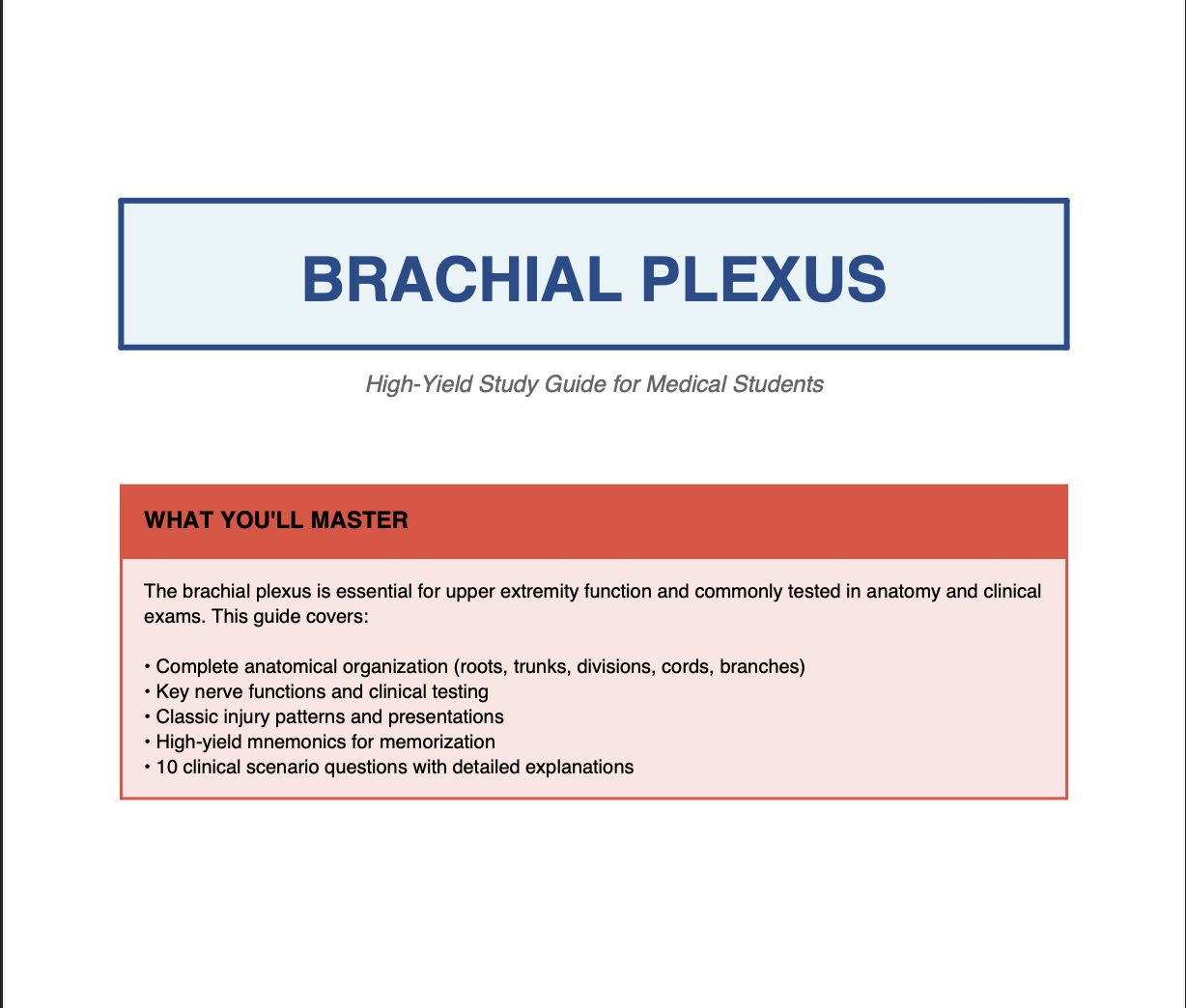
The brachial plexus is one of the most tested and most challenging topics in anatomy and clinical medicine. This guide breaks down the brachial plexus into a clear, step-by-step framework that makes nerve organization, function, and injury patterns intuitive and easy to recall on exams.
Designed for medical students who want clarity, structure, and clinical relevance—without unnecessary detail.
What’s included
✔️ Complete brachial plexus organization (roots → trunks → divisions → cords → branches)
✔️ High-yield anatomical diagrams with clear labeling
✔️ Motor and sensory functions of all terminal nerves
✔️ Non-terminal branches and their clinical significance
✔️ Classic injury patterns (Erb palsy, Klumpke palsy, axillary, radial, median, ulnar injuries)
✔️ Exam traps and high-yield mnemonics
✔️ 10 clinical scenario practice questions with detailed explanations
Perfect for
• USMLE Step 1 preparation
• Pre-clinical anatomy and neuroanatomy exams
• Clinical rotations involving neurology, orthopedics, or surgery
• Students who want a concise but complete brachial plexus reference
Guide to Cranial Nerves is a high-yield neuroanatomy study guide designed for efficient exam-focused review. It summarizes all twelve cranial nerves with clear function breakdowns, classic lesion findings, and a simplified brainstem origin diagram, followed by a self-test to reinforce retention.
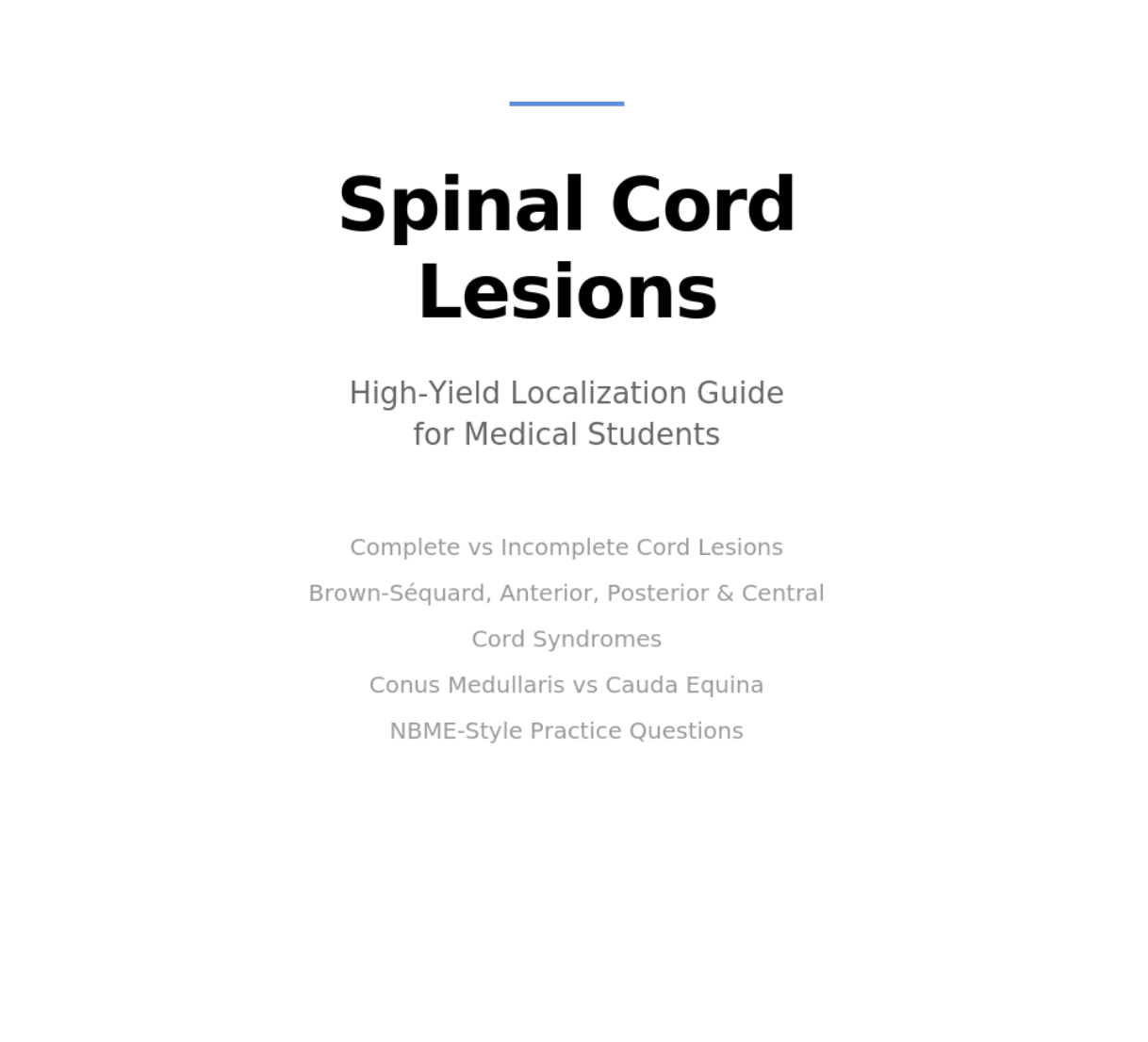
Master spinal cord localization with this visual, exam-focused study guide designed for medical students. This 5-page PDF covers all major syndromes including Brown-Séquard, Anterior/Posterior Cord, Central Cord, and Conus vs Cauda Equina with color-coded anatomical diagrams showing exact lesion locations. Each syndrome includes clinical findings, common causes, and board-style buzzwords for pattern recognition. Features a quick reference grid, key tract pathways (corticospinal, dorsal columns, spinothalamic), rapid localization table, and a 10-question practice quiz with answers. Perfect for USMLE Step 1 & 2 prep, neurology and surgery shelf exams, and clinical rotations. Stop memorizing lists and start recognizing patterns with clinical reasoning skills that work on exams and at the bedside.